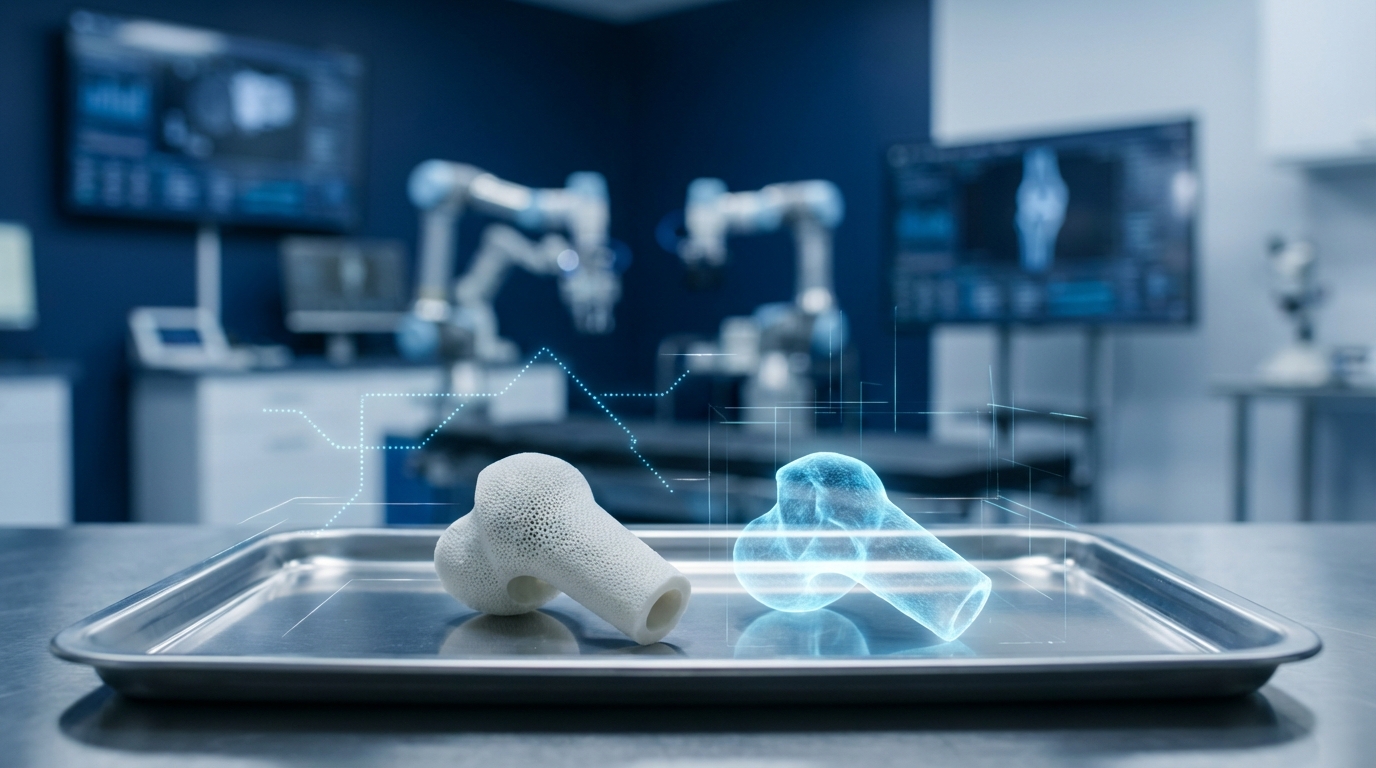

Anatomische Präzision: Von standardisierter Inventur zu digitaler On-Demand-Fertigung
Ein Unternehmen für patientenspezifische 3D-gedruckte Implantate und chirurgische Instrumente, dessen Technologie anatomisch perfekte Rekonstruktionen ermöglichte, stand vor dem "Skalierungs-Paradoxon der Personalisierung": Traditionelle Implantate basieren auf Standardgrößen, erfordern intraoperative Anpassung (Abschleifen, Biegen), was Operationszeit verlängert und Ergebnisvariabilität erhöht. Die 3D-Druck-Lösung bot präoperative Präzision, aber das Geschäftsmodell schien mit "Massenproduktions-Logik" unvereinbar—jedes Implantat ein Unikat, jede Planung erfordert individuelle Bildverarbeitung und regulatorische Dokumentation. Kliniker wollten die Präzision, aber fürchteten logistische Komplexität; Krankenhäuser fürchteten Kosten pro Fall und Lieferzeiten; Die "ökonomische Skalierung" schien unmöglich in einer Welt der "anatomischen Einzigartigkeit".
Das Dilemma der personalisierten Medizin: Sie eliminieren operative Variabilität und verbessern Outcomes, aber das Produktionsmodell erscheint ineffizient im traditionellen Sinn; Sie müssen nicht nur Technologie verkaufen, sondern ein neues "chirurgisches Workflow-Paradigma" etablieren; Die Hürde zwischen "technologischer Machbarkeit" und "ökonomischer Rentabilität" scheint unüberwindbar.
Unsere Investment-These erkannte einen disruptiven Knotenpunkt in der orthopädischen und fußchirurgischen Versorgung: Die Trennung von "Inventarökonomie" und "Präzisionsökonomie". Dieses Unternehmen transformiert das Implantat vom "standardisierten Massenprodukt" zum "digitalen Informationsprodukt"—einmal entworfen, überall produzierbar, aber lokal anatomisch perfekt. Mit der wachsenden Verbreitung präoperativer Planungssoftware und der Integration in OP-Navigationssysteme wird "patientenspezifisch" nicht zum Luxus, sondern zum neuen Standard der chirurgischen Qualitätssicherung. Der globale Markt für orthopädische Implantate bewegt sich vom "one-size-fits-most" zum "exact-fit-for-one", und wer die digitale Supply Chain beherrscht, beherrscht die nächste Generation der Implantologie.
Wenn Ihre Technologie auch vor dem "Personalization Paradox" steht—klinisch überlegen, aber scheinbar unmöglich zu skalieren—können wir gemeinsam dieökonomische Architektur neu designen: Wie transformiert man "Massenanfertigung" in "massive Personalisierung" durch digitale Automatisierung, und welche Partnerschaften mit Krankenhausnetzwerken sind notwendig, um "Just-in-Time-Implantologie" zum klinischen Standard zu machen?